
Why Temples and Masjids?
Temples are Masjids because they have in the debate (which they shouldn’t be) for quite some time now. “It’s like a gust of wind on a hot summer afternoon”.
How is this a topic of debate?

Temples and mosques in India are a topic of debate because of their association with a vague range of topics starting from politics, terrorism to traffic jams.
Politics in India is more or less inclined to the religion aspect of the society rather than the development aspect. Parties or their ideologies don’t matter. The core issue of any election campaign of any political party is religion in India and similar throughout the world.
Islam is a religion of peace and love.
Brief History of Islam
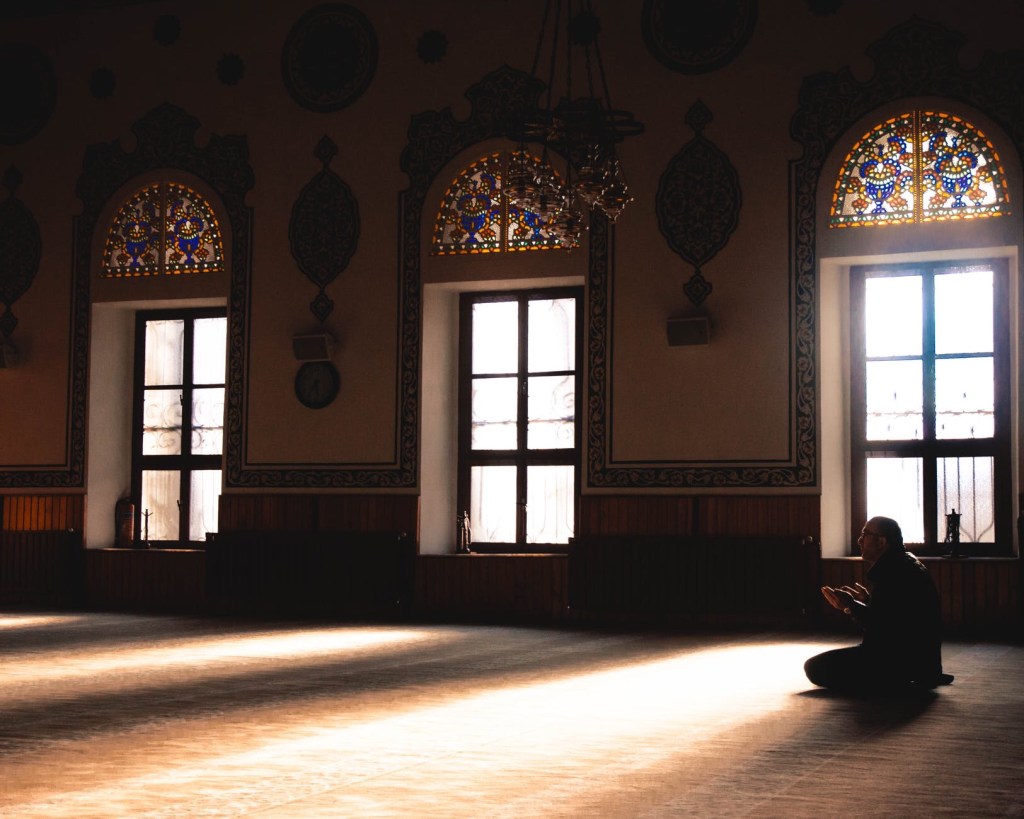
The word Islam means “submission to the will of God”. “Jihad” the new politicised word, means religious war. The war of good vs bad.
It is said that when Prophet Mohammad was meditating inside a cave he had a revelation. Arc Angel Gabriel appeared and asked Mohammad to spread the word of God.
After 612 A.D. Mohammad started preaching the word of God and in 622 A.D. he went to Mecca & Madina with his followers. This journey is known as “Hijra” and marks the commencement of the “Islamic Calendar”.
The Quran is said to have been written by scribes of the Prophet Mohammad citing Allah as the first person and talking to him through Gabriel. The Quran consists of 114 “Surah” or chapters.

The text is believed to exceed any previous known text to mankind about God. It also contains the revelations made by Allah to Mohammad through Gabriel. Scholars argue that it was compiled shortly after Mohammad’s death.
Who were the Caliphates?
The Muslim leaders who took over after Mohammad were came to be known as the “Caliphates”.
Abu Bakr is said to be the first Caliphate after Mohammad’s death in 632. He was one of the father-in-laws of Mohammad. After his death in 634 the other father-in-law of Mohammad Caliphate Umar took charge. Caliphate Umar was assassinated than Mohammad’s son-in-law Caliphate Uthman became the next king. But Uthman was also killed and finally Caliphate Ali, Mohammad’s cousin and son-in-law became the next Caliphate.
During their juncture the first four Caliphates occupied Palestine, Iraq, Syria and Iran. A while after these expeditions Islam also spread to Africa, Europe and Asia. Eventually making its way to India.
What are the castes or sects of Islam?

Islam started getting accepted more rapidly after Mohammad’s death and two major sects that emerged in Islam are –
•The Shiyaas.
•The Sunnies.
Other minority castes include –
•The Alawite.
•The Wahhabi.
•The Kharijites.
•The Ibadis.
•The Ahmediyas.
The issue of disagreement between the Shiyaa Muslims and the Sunnie Muslim is that the Shiyaa believe that only Caliph Ali and his descendants are the real successors to Muhammad. While the Sunnis believe that the first four caliphs were the true successors to Muhammad.
History of Islam in India.

The Barwada Mosque in Ghogha, Gujarat is said to be built before 623 CE whereas the Cheraman Juma Mosque in Methala, Kerala in 629 CE
Islam is the second-largest religion in India, constituting 14.2% or 172.2 million followers. Making India a country with the largest Muslim population outside an Islamic country.
Arabs and Indians have had a long history of trade even before the advent of Islam in the Arab countries. The trade relations usually included dates, clothes, spices to and from both the civilisations. At the age of 17 Mohammad Bin Qasim was the first Muslim general to invade Sindh (one of the four provinces of modern day Pakistan) in India.
After him Mohammad of Ghazni was the second most ferocious ruler to invade the Indian territory and win over the Rajput rulers. Delhi Sultanate saw the blend of Hindu and Islamic religion. Most of the rulers in the Mughal dynasty allowed religious harmony. Though Aurangzeb’s rule, the great grandson of Akhbar is said to be one of religious oppression.
Partition of Pakistan and India.
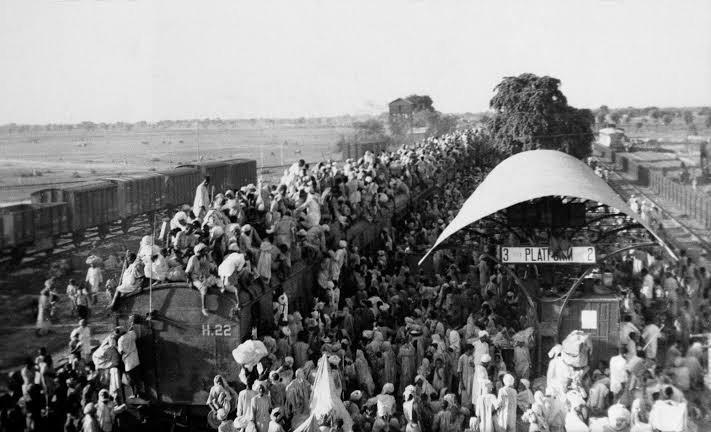
“I find no parallel in history for a body of converts and their descendants claiming to be a nation apart from the parent stock” said Mahatma Gandhi.
Along others the divide and rule policy of the Britishers mostly comprehended by Sir John Lawrence played a significant role in the souring of relations between Hindus and Muslims and the future of Islam in India.
In the August of 1947 began one of the greatest migrations in human history, as millions of Muslims went to West and East Pakistan (the latter now known as Bangladesh) while Hindus and Sikhs came to India. Many hundreds of thousands never made it.
Some Journalists and soldiers of the British army who had witnessed the Nazi death camps claimed India’s Partition brutalities was much worse. With both sides eager to end one another.
How has the scenario changed in the past few years?
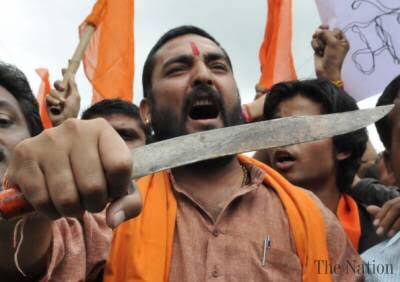
Indians especially Hindus believe that they have been deceived, lied, cheated with by the previous governments. They believe that the minority in the country is reaping all the benefits while their contribution makes up the majority of the economy.
This is an era of xenophobia or ultranationalism and that is bad for any country and its people. Nobody is ready to accept their fault but blame it on others satisfying oneself by saying that my religion is above all others and in order to respect God I will flourish my religion even if that includes doing the most inhuman things known to humankind, by their interpretation.
Indians have associated the incompetence of few politicians with that of religious oppression on both sides of the spectrum.
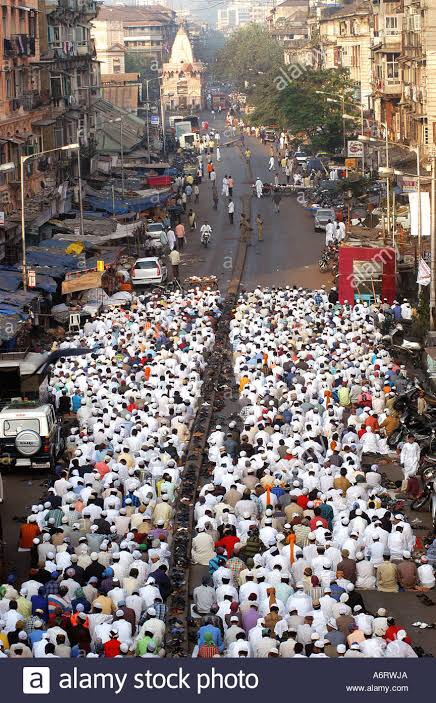
Why Muslims in India have to pray on the road?
According to Wikipedia there are 2 million temples and 300 thousand mosques in India with Bhopal having the most number of mosques. It is worth mentioning that this is more than most of the Islamic countries around the world.
The average size of the praying area inside a mosque is 400 square feet. So even 300 thousand is a less number to cater the need of all the 173 million Indian Muslims who wants to offer their prayer to Allah inside a mosque.
Masjids get overcrowded on Jummah or Friday, the Holy Month of Ramadan and Eid. Due to this people who must offer prayer in a given duration are left with no choice but to use any land they find to offer their prayers to Allah and seek his blessings.
This situation becomes tiresome for people praying, people going on the road, which is being used to offer prayer to Allah, the policemen who are making sure that everything goes peacefully and the government. But it can be tackled or changed only if we learn to do the right thing and not the beneficial thing.

Think of it as a question in maths. You ask your teacher to explain it to you with a clear mind, without any bias. Just to get the right answer. So do the same in life. Trust others, try to help them, don’t boast and feel happy in being “good”!
 Beyond The Lines
Really appreciate your extensive research on Islam. My opinion about praying on roads is similar. A lot of inconvenience can be avoided if Jamaats (congregations) are held in places which don’t create public disturbance. Parks, parking lots, and other open spaces for example. We have similar issues in Pakistan. A lot of it comes from the mindset of people, which of course will take decades to change.
LikeLiked by 1 person
Thanks for being just to my article. But I disagree with the fact that Jammats could be held in parks, parking lot. No, they should be held at specified clean and pure places.
LikeLiked by 1 person
I agree that there’s an element of purity involved, but then how would you accommodate larger prayer areas in already densely populated cities? I’m assuming that many of our cities are similar in terms of urban planning – Karachi and Mumbai for example. In an ideal situation, what you’re proposing should be the case, but right now I feel we need a more pragmatic solution.
LikeLike