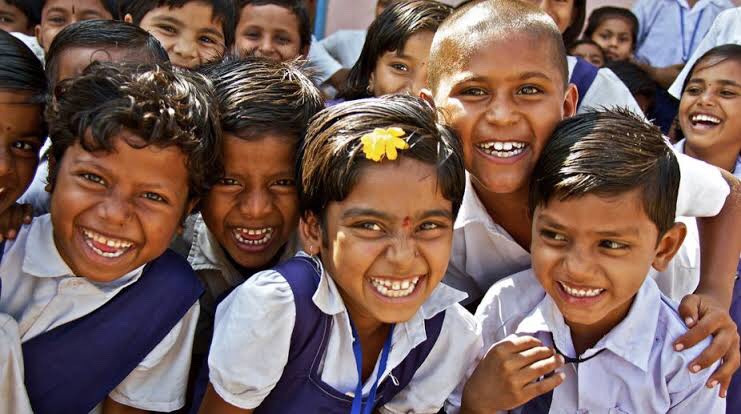
What is the National Education Policy of India?
The National Education Policy of India or N.E.P.I. was proposed by Minister of Education Ramesh Pokhriyal and approved by the union cabinet in July 2020.
The N.E.P.I. will provide to all students, irrespective of their place of residence, a quality education system, with particular focus on historically marginalized, disadvantaged, and underrepresented groups (as briefed by H.R.D. ministry).
Vision of the N.E.P.I.
This National Education Policy imagines an education framework established in Indian ethos that contributes straightforwardly to changing India. That is Bharat, economically into an impartial and energetic information society, by giving top notch schooling to all, and consequently making India a worldwide information superpower.
Did N.E.P.I. replace any old education policy?
Yes, The new policy replaces the previous National Policy on Education, 1986.
What was the National Policy on Education, 1986?
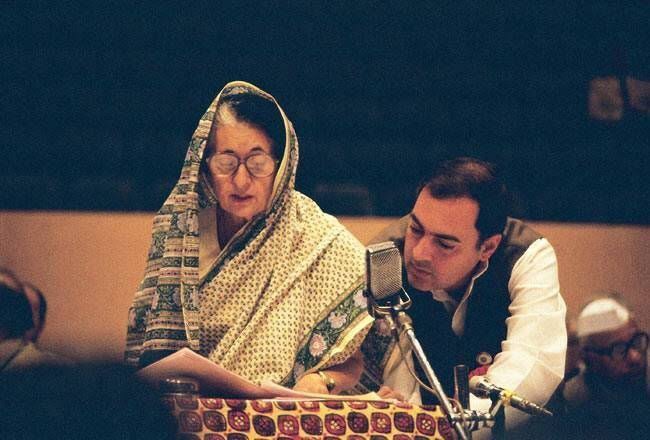
In 1986, Rajiv Gandhi then prime minister of India, introduced a new National Policy on Education. The NPE called for a “child-centred approach”. Some of the schemes launched under it were “operation blackboard” and the “Indira Gandhi National Open University”(I.G.N.O.U.). Total expenditure amounts to 6% of the G.D.P. from 1986-2019 (variances in expenditure were seen in later years).
How is the N.E.P.I. 2020 different from N.P.E. 1986?
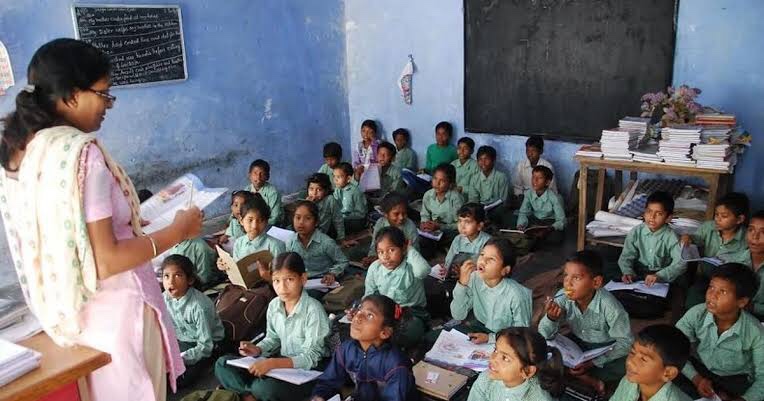
The 1986 policy was based on a “10+2 structure” whereas the N.E.P.I. advocates for a “5+3+3+4 structure”. This includes age groups 3-8 years (foundational stage), 8-11 (preparatory), 11-14 (middle), and 14-18 (secondary).
Under N.P.E. 1986, a student was supposed to give exams every year in order to get promoted to the next class but in N.E.P.I. 2020 exams will only be held in classes 2, 5 & 8.
There’s no change in the board exams for classes 10th & 12th.
N.E.P.I. in higher education.
N.E.P.I. has perceived higher education with a very holistic approach by providing multiple entry and exit options for students.
This includes the following provisions :-
• A certificate after completing 1 year of study
• A diploma after completing 2 years of study
• A Bachelor’s degree after completion of a 3-year programme
• A 4-year multidisciplinary Bachelor’s degree
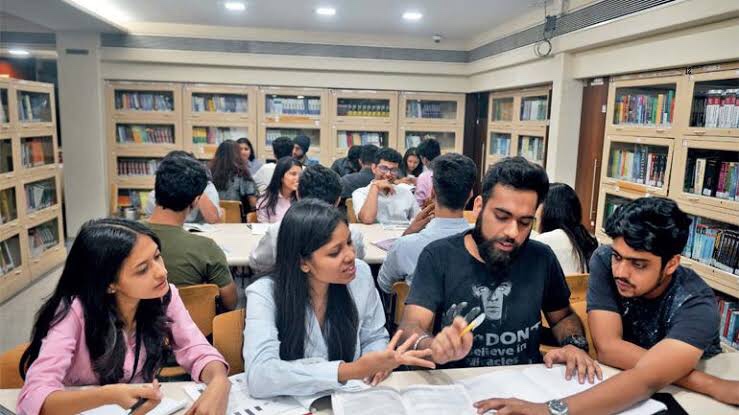
Apart from these students will also have the option to leave a course in between (for whatever reason) and can continue from where they had left.
Students can also pursue two different courses at the same time by enrolling for a one course at any college or university and the second through I.G.N.O.U.

What are the new educational bodies and institutions under the N.E.P.I. 2020?
Academic Bank of Credit – A computerized stockpiling of credits procured to help continue education by using credits for further education.
National Research Foundation – To improve and promote research and innovation.
Special Education Zones – To zero in on the education of underrepresented groups in distraught districts.
Gender Inclusion Fund – To assist the nation in the education of female and transgender children.
National Education Commission – Headed by the Prime Minister of India.
When will the National Education Policy be implemented in India?
• The public authority has set up an objective of 2040 to carry out the whole N.E.P.I. strategy.
• N.E.P.I. won’t be executed right away.
• The government would work at that point to gradually carry out the arrangement key focuses individually, while collecting adequate assets to keep up the N.E.P.I. proposition.
However, in the budget for 2021-22 the allocation for the education ministry has been cut to Rs 93,223 crore from Rs 99,311 crore, as per the budgetary proposals.
As a student I found the National Education Policy of India (N.E.P.I.) very motivating but successfully implementing it in a country as big as India with such a huge population is a hectic task in itself.

 Beyond The Lines
💚✨🌷
LikeLiked by 3 people
💕💕🙏
LikeLike
✨🙂
LikeLiked by 1 person
Very nice!! 😊
LikeLiked by 2 people
Thank you. I hope it helps!
LikeLiked by 1 person
You’re always welcome 😊
LikeLiked by 3 people
VERY NICE
Amity University MBA Project Report
AMITY Project Report
Amity Online Project
LikeLiked by 2 people
VERY NICE WRITING
Amity University MBA Project Report
AMITY Project Report
Amity Online Project
LikeLiked by 1 person
Thank you. What is the hyperlink for?
LikeLike