
In a country like India imposing another countrywide lockdown is highly unlikely but states may impose statewide limitations depending on the total number of infected people in that state. For ex – Delhi has been put under lockdown for a week i.e. from 19th April, 2021 to 26th April, 2021.
“Lockdown is a term coined for the developed countries!”
Strict lockdowns in countries where a significant share of the population is poor are likely to have more severe consequences on welfare than in richer countries.
Are lockdowns a sustainable model for the developing countries?
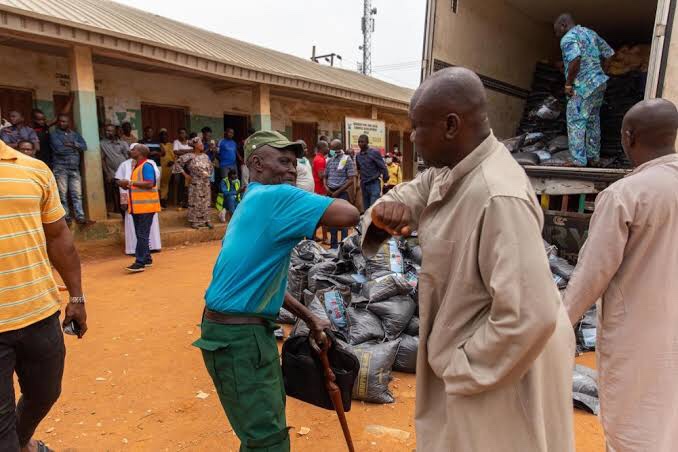
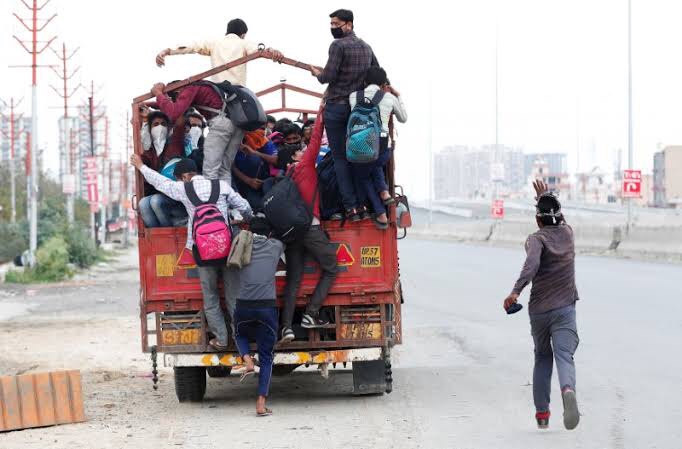
No, they are not. Here I would like to point out the example of India. Last year a lockdown was imposed by the government of India in March. It surely provided motivating results as far as curbing the transmission was concerned but millions lost their jobs overnight.
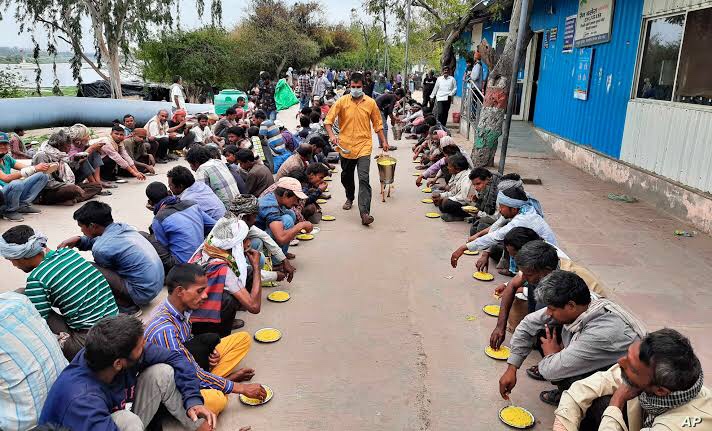
Few days in most of the daily wage workers and migrant labourers didn’t have enough money to buy even the essential items for themselves, let alone think about travelling back to their home states.
Five reasons why lockdown is not “the” solution for developing countries?
• Closing businesses overnight has a drastic impact on the gdp of any country and this leads to decreased spending on the budget.
• Most of the women in developing countries work in the informal sector i.e. food stalls, crafts etc. Lockdown results in loss of jobs and business for many such women overnight.
• Households already close to subsistence with e.g., no storage of food and other resources, will bear large welfare costs from being limited in their movements and possibilities to generate income.
• The mortality rate in developing countries is less than that of developed countries. So instead of imposing a uniform lockdown, it should be based on demographics, per capita income etc.
• Imposing Lockdown in third-world and developing countries has made the UN’s Sustainable Development Goal of reducing extreme poverty globally to 3% by 2030 unachievable.
My take on this is that if any developing country is so keen on imposing lockdown then it should be done in a limited manner i.e. limited lockdown (3-7 days).
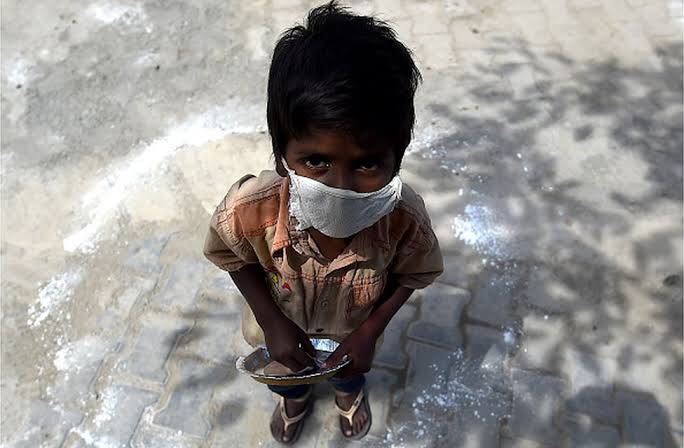
You see, lockdown may protect them from the virus but if people don’t have money, they don’t have jobs to support their livelihood then they may not die from the pandemic but from starvation. So governments must address the needs of the most affected class if another lockdown is to be imposed.
 Beyond The Lines
Reblogged this on Ned Hamson's Second Line View of the News and commented:
You see, lockdown may protect them from the virus but if people don’t have money, they don’t have jobs to support their livelihood then they may not die from the pandemic but from starvation. So governments must address the needs of the most affected class if another lockdown is to be imposed.
LikeLiked by 5 people
Thank you Ned. 🙏
LikeLike
I agree. But the government could have put in restrictions for large gathering that have happened recently, including election rallies, etc.
LikeLiked by 5 people
Yes, the congress chief has questioned the Bjp regarding rallies in election bound states after which the bjp has reduced their campaigns in the states. I hope it’s not too late…
LikeLiked by 1 person
Nay I reblog this and other posts onto my blog=? a fair number of my readers are from India00as are many o its contributors of material.
LikeLiked by 3 people
It will help them understand and not panic. 🙏
LikeLiked by 1 person
THANK YOU YET AGAIN!!!!!
LikeLiked by 2 people
You’re welcome Jonathan!
LikeLiked by 1 person
😀
LikeLiked by 2 people
Reblogged this on By the Mighty Mumford and commented:
A QUALIFIED OPINION…ON COVID-19 MEASURES IN INDIA!
LikeLiked by 2 people
I think the economic cost of lockdowns, even when necessary for public health and preventing the spread of the virus, is something that needs to be brought up more.
LikeLiked by 3 people
See, it’s not like last year. Not like shooting in the dark. We have the weapon to push COVID-19 off the cliff. All the world needs now is seamless administration of the vaccine.
LikeLiked by 1 person
How is the vaccine roll out going in India?
LikeLiked by 2 people
Till now 105 million people have received the first dose and 11 million people have received the second dose. This is also a huge number but for counties in Europe, North America not for India or China.
LikeLike
Here is South Africa, it is difficult economically, we had a hard lock down in the beginning for 4 months but then we also eased off, poor people were beginning to starve. Children could no longer rely on feeding schemes and they had no food…. What a terrible decision to have to make as leaders.😢😢
LikeLiked by 4 people
Well the way you describe it, the situation was not much different here in India.
LikeLiked by 1 person
It’s a heartbreaking situation. I wonder how the children will be when they have grown up through this.
LikeLiked by 2 people
See, it won’t matter if the government, any government become more development centric. But yes, if there’s no change in the policies than it will be a tough challenge for the future
LikeLiked by 1 person
Very scary.
LikeLiked by 2 people
Veena don’t be scared. Let’s pray that the vaccination drive gets a boost so that we can finally defeat this pandemic.
LikeLike
Yes true that.
LikeLiked by 1 person
I dread to think about the daily wage workers.
LikeLiked by 1 person
Yesterday I read the news that the centre will provide food to 800 million people for the month of May, June and July. So that’s a good news.
LikeLike
Cov-19 now ruling Indian people very badly , before worst situation come , lockdown must be 😟 my coment !!
LikeLiked by 2 people
I think instead of imposing another lockdown we should increase the production of vaccine in the country because lockdown is temporary, vaccination is permanent!
LikeLiked by 1 person
Very true ✅🙏
LikeLiked by 1 person
Thank you. 🙏
LikeLiked by 1 person
🌷🙏🌷
LikeLiked by 1 person
Reading about its attempts to screw over the small-guy farm owners in favor of the mega corporate farms, to me it sounds like India’s governance/system may be turning into a South Asian version of the Western virtual corpocratic rule — big business and power interests before individual and even national/mass-populace best interests.
Though I don’t know about Britain, both American and Canadian governances generally maintain thinly veiled yet firm ties to large corporations; it’s as though elected heads are meant to represent big money interests over those of the working citizenry and poor. (I believe it is basically why those powerful huge-money interests generally resist proportional representation electoral systems of governance, the latter which tends to dilute corporate lobbyist influence on consecutive governments.) Accordingly, major political decisions will normally foremost reflect what is in big business’s best interests. And don’t expect to hear this fact readily reported by the mainstream news-media, which is concentratedly corporate owned.
LikeLiked by 1 person
It’s not about America, Canada, the U.K. or India. Every country favours big corporations.
This a very informative comment. Thank you.
LikeLiked by 1 person
Thank you for your reply.
There’s a big difference between reasonably accommodating corporations (which translates into many additional domestic jobs), and that of mostly acting as their office-holding lapdog. This sounds harsh and even unbelievable, but it’s true.
Those doubting the powerful persuasion of huge business interests need to consider how high-level elected governing officials can become crippled by implicit or explicit corporate threats to transfer or eliminate jobs and capital investment, thus economic stability — a crippling that is made even worse by a blaring news-media that’s permitted to be naturally critical of incumbent governments.
Contrarily, in China, for example, the government basically controls the corporations, whereas Western governances, notably the U.S. and Canada, are essentially steered by corporations’ economic intimidation or extortion. In fact, corporate representatives actually write bills for our governing representatives to vote for and have implemented, typically word for word, under the guise of saving the elected officials their time! It has become so systematic here that those who are aware of it — including the mainstream news-media — don’t bother publicly discussing it. (I believe it is basically why those powerful money interests generally resist proportional representation electoral systems of governance, the latter which dilutes corporate lobbyist influence.)
China, logically, takes advantage of this serious flaw or weakness in Western virtual corpocratic governances — i.e. big corporate profit before individual and even national interests. It’s as though elected heads are meant to represent huge money interests over those of the working citizenry and poor. Accordingly, major political decisions will normally foremost reflect what is in the influential corporations’ best interests.
Thanks again, Aashwinshanker, for your article and allowing me to voice myself.
LikeLiked by 1 person
What should I say! That’s so true and vivid description of the political parties, mega corporations and their greedy interests.
I’m glad that you shared your views.
LikeLiked by 1 person
If I may, I’d like to add perhaps the most concerning example of this potent corporate-government manipulation in my home country: Whenever Canada’s federal government promises universal medication coverage (the last such promise was made following the last election, October 2019) the pharmaceutical industry reacts with threats of abandoning their Canada-based research and development (etcetera) if the government goes ahead with its ‘pharmacare’ plan. Why? Because universal medication coverage would negatively affect the industry’s plentiful profits. Of course profits would still be great, just not as great, which bothers the industry greatly.
In late 2019, an Angus Reid study found that, over the previous year, due to medication unaffordability, about one quarter of respondents decided against filling a prescription or having one renewed. Not only is medication less affordable, but many low-income outpatients who cannot afford to fill their prescriptions end up back in the hospital system thus costing far more for provincial and federal government health ministries than if the generic-brand medication was covered. So, in order for the industry to continue raking in huge profits, Canadians, as both individual consumers and a taxpaying collective, must lose out huge. And our elected representatives, be they federal Liberals or Conservatives, seem to shrug their figurative shoulders in favor of big corporate interests — yet again.
Considering it is such a serious health affair for so many people, impressed upon me is the industry lobbyists’ potent influence on our top-level elected officials for the sake of large profit-margin interests.
LikeLiked by 1 person